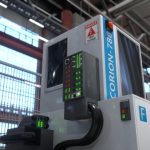



For building projects in Singapore, using paper sign-in sheets is not safe or efficient. A Biometric Time Attendance System gives you accurate information about your employees, but regular office equipment won’t work in the field [1]. Choosing the right rugged facial and thumbprint recognition device is very important for dependability, compliance, and getting your money’s worth. This guide lists the most important features you need for a biometric access control system that will work in the environment of the site.
The main problem is that construction sites break standard devices.
Consumer-grade biometric readers will stop working quickly if they are exposed to dust, moisture, vibration, temperature changes, and physical knocks every day [2]. If a system fails, you lose payroll data, let people in who shouldn’t be there, and have to pay for replacements. The answer is industrial hardware that was made for this purpose.
5 Things You Must Have on Your Selection Checklist
1. Environmental Durability (The First Filter)
Don’t just believe what they say; look for proof [2], [3]:
- IP Rating: IP65 is the absolute minimum. This guarantees dust-tightness and protection against water jets. IP66 or IP67 is strongly recommended for readers mounted outdoors, exposed to Singapore’s heavy rain and pervasive dust.
- Temperature & Humidity Tolerance: The device must operate in Singapore’s full climate range. Check the specs to make sure the range of operation is at least 0°C to 55°C and the humidity is at least 5–95% (non-condensing).
- Vibration and Impact Resistance: Look for devices that have been tested to MIL-STD-810G standards or have an IK rating for impact. This keeps things stable when they are near heavy machinery or on structures that shake.
2. Biometric sensor and technology to stop spoofing
Durability must not come at the cost of accuracy [4].
- Facial Recognition: Choose devices with 3D infrared sensing or dual-lens (RGB + IR) cameras. These are much better than 2D cameras because they can work in complete darkness, resist glare from the sun, and are much harder to fake with a picture or video.
- Thumbprint Readers: Multispectral scanners are very important. They can read through the skin, so they work well for workers whose fingers are dirty, worn, wet, or greasy, which is a common problem on site.
- Anti-Spoofing: Both types of devices must have active liveness detection. This stops fraud by making people blink or move their heads slightly (facial) or checking for blood flow or pulse (fingerprint).
3. Ability to work offline and buffer
The site’s network connection is not reliable. The device must work on its own [[5]]([Shunamite Pte Ltd. Technical Specifications: Rugged Biometric Terminals for Construction Sites]).
- Offline Verification: It should keep a secure, encrypted database of authorized personnel templates on the device itself. Even when the network is down completely, access is granted and attendance is recorded.
- Data Buffering: The device must securely store all transaction logs (check-in/check-out events) and automatically send them to your central server when the connection is restored. There is no way to lose data.
4. Power and mounting options
- Power over Ethernet (PoE): The best answer. A single cable carries both power and data, making installation easier and protecting against power fluctuations [[5]]([Shunamite Pte Ltd. Technical Specifications: Rugged Biometric Terminals for Construction Sites]).
- Alternative Power: You can choose between a 12V DC power source or a backup battery for places that are very far away.
- Mounting: Make sure that the housing and bracket let you securely mount it on temporary hoardings, site office walls, or rough poles, and that it can’t be tampered with [3].
5. Working with manpower systems
The hardware is only one part. It has to work well with the rest of your systems [1].
- Open API: The device or its software should have an API that lets it work with your current payroll software (like SAP or QuickBooks) and project management dashboards.
- Centralized Management: You should be able to add and remove users, run reports, and keep an eye on all devices at multiple sites from one cloud-based or on-premises platform.
Suggested Type of Device Based on Main Use Case
- For Main Gate Time & Attendance: A rugged dual-factor terminal (facial + thumbprint) is the best choice. It has a high throughput for shift changes and a backup method in case one biometric stops working for a short time (like when your hands are really dirty) [4].
- For High-Security Area Access: A rugged facial recognition device with high-level anti-spoofing is best for server rooms or chemical stores because it is truly hands-free and more hygienic.
- For Distributed Checkpoints (Canteen, Tool Rooms): Lower-cost, single-factor rugged fingerprint readers can work well for some log points.
How to Choose the Right Vendor in Singapore
When looking for a biometric access control system in Singapore, make sure to work with companies that focus on industrial and construction uses [6]. They will know the environmental requirements, offer sturdy mounting options, and give warranties that cover the conditions on site. Ask for a site visit and a short-term pilot to test the devices with your employees before you roll them out to everyone [6].
Buying tough hardware up front stops you from having to do constant maintenance, losing data, and having your system go down. It makes sure that your biometric time attendance system gives you reliable and accurate data about your workers from the start of the project until it is handed over [1].
References
[1] Ministry of Manpower (MOM), Singapore. (2023). What are the requirements for keeping of employee personal information?
[2] International Electrotechnical Commission (IEC). (2021). IEC 60529: Degrees of Protection Provided by Enclosures (IP Code)
[3] Military Standard, United States Department of Defense. (2019). MIL-STD-810H, Environmental Engineering Considerations and Laboratory Tests
[4] International Biometrics + Identity Association (IBIA). (2022). Guide to Deploying Biometrics in Challenging Environments.
[5] Shunamite Pte Ltd. (2023). Technical Specifications: Rugged Biometric Terminals for Construction Sites.
[6] Shunamite Pte Ltd. (2023). Consultation and Pilot Program for Biometric Systems.